
“You cannot build performance on weaknesses. You can only build on strengths.”
– PETER DRUCKER
25+
Years of experience in entrepreneurship, business management, sales and marketing
250+
Hours of facilitating team building and strategic retreats since 2014
500+
Employees who became more engaged through team building workshops
50+
Client organizations from publicly traded companies and government agencies to startups, and nonprofits
Discover and share your team’s CliftonStrengths
The Social Styles Teambuilding Workshop is built around the Social Styles model, a causal-based psychometric framework developed through decades of workplace behavior research. It helps individuals better understand their own behavioral preferences and those of others, enabling more effective communication, collaboration, and conflict management.
The model maps two core dimensions—Assertiveness (task orientation) and Responsiveness (relationship orientation)—to identify four distinct Social Styles:
- Driving (Control Specialists): Decisive, goal-focused, and action-oriented.
- Expressive (Social Specialists): Outgoing, enthusiastic, and energetic communicators.
- Amiable (Support Specialists): Cooperative, supportive, and relationship-focused.
- Analytical (Systems Specialists): Precise, detail-oriented, and methodical.
By understanding their Social Style and learning versatility skills, participants gain actionable tools to adapt their behavior, improve relationships, and increase team effectiveness.
Benefits & measurable improvements
- Enhanced Self-Awareness: Identify personal behavioral preferences and their impact on others.
- Improved Communication and Collaboration: Learn how to adapt communication styles to connect more effectively with diverse colleagues.
- Better Conflict Resolution: Apply versatility techniques to navigate tension and resolve disagreements constructively.
- Increased Team Cohesion: Foster a shared understanding of how different styles contribute to team success.
- Measurable Outcomes:
- Observable improvements in interpersonal communication reported in post-session feedback.
- Reduction in conflict frequency and improved resolution speed in team settings.
- Stronger collaboration and alignment during meetings and joint projects.
The science behind CliftonStrengths
CliftonStrengths is a causal-based psychometric assessment validated through decades of research by Gallup:
- Derived from a study of over 50,000 organizations, 1.2 million employees, and data collected in 45 countries.
- Built on positive psychology principles and designed to measure inherent talent rather than personality traits.
- Extensive psychometric validation studies confirm its reliability and predictive power for engagement, performance, and development outcomes.
- Organizations using strengths-based development report higher employee engagement (up to 23% increase), better retention, and improved productivity metrics.
Who it’s for
- Teams of 5 to 100 members, from any department or functional area.
- Leadership teams looking to better understand how to leverage collective strengths.
- Organizations seeking to align team strengths with business goals for improved results.
Format
- Preparation: Half-day preparation to set up assessments, gather insights, and tailor the session to your team’s context.
- Workshop Duration: Half-day (2–3 hours) session including:
- Introduction to CliftonStrengths (20 min): Overview of the framework and its benefits.
- Individual and Team Results (60 min): Review individual profiles and explore the team’s strengths map.
- Application and Collaboration Exercises (60 min): Interactive activities to practice adapting communication and leveraging strengths.
- Action Planning (30 min): Create a clear plan to integrate strengths into daily work.
- Delivery: Available in person or online (digital collaboration tools provided for virtual sessions).
- Language: English or French.
Discover our other Team Building activities and workshops

Discover and share your team’s CliftonStrengths
Identify your natural talents and learn how to turn them into strengths to maximize both individual and collective impact by sharing them within your team.

Explore and share your team’s Social Styles
Understand communication styles and adapt your interactions to collaborate more effectively, influence others, and manage conflicts within your team.
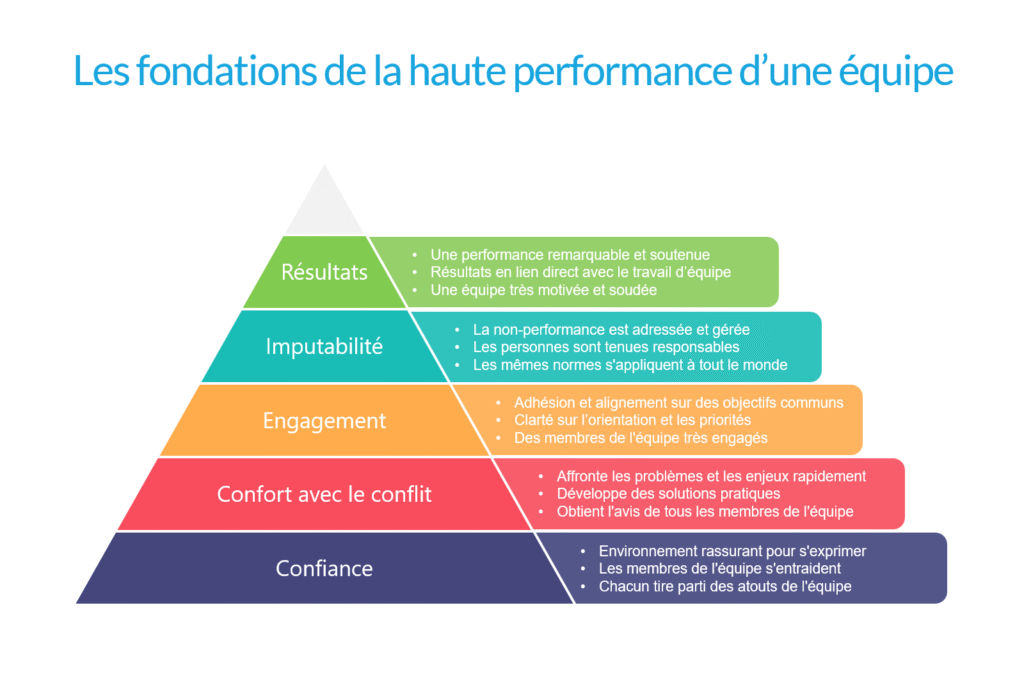
Overcome the Five Dysfunctions of a Team
Identify and address the obstacles that could hinder trust, cohesion, accountability, and your team’s collective performance.
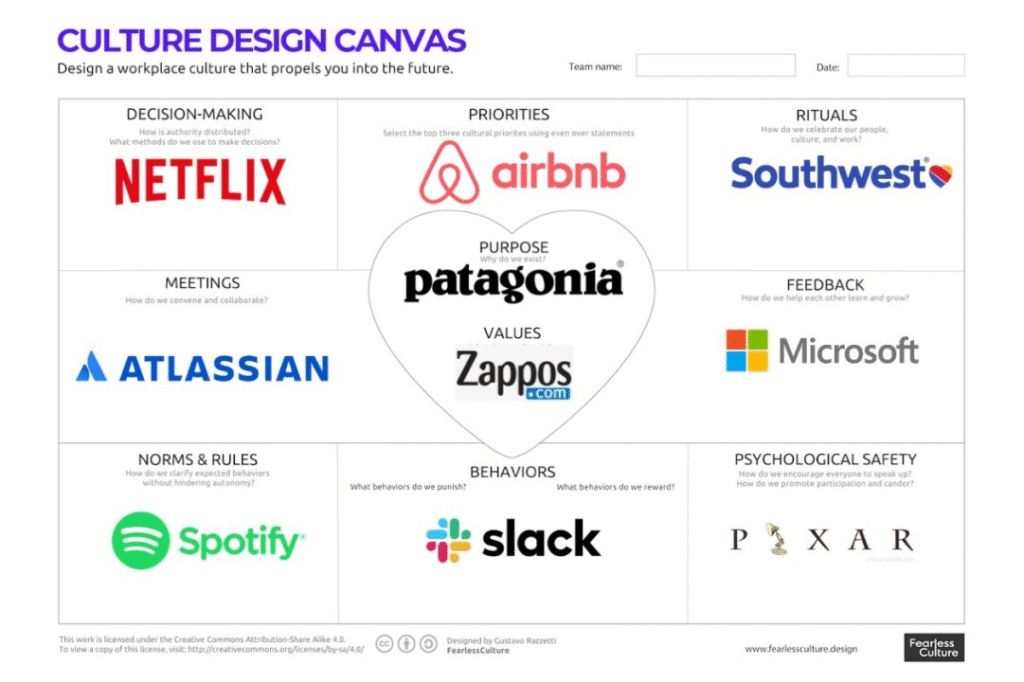
Define your team culture with the Culture Canvas
Clarify or align your team’s culture with your organization’s values using a clear and participatory framework.

The collaborative Marshmallow Challenge
Boost creativity, collaboration, and iterative thinking with this fun challenge that reveals team dynamics in action.
Request a free discovery call to find out how I can support your growth.
Insights and best practices
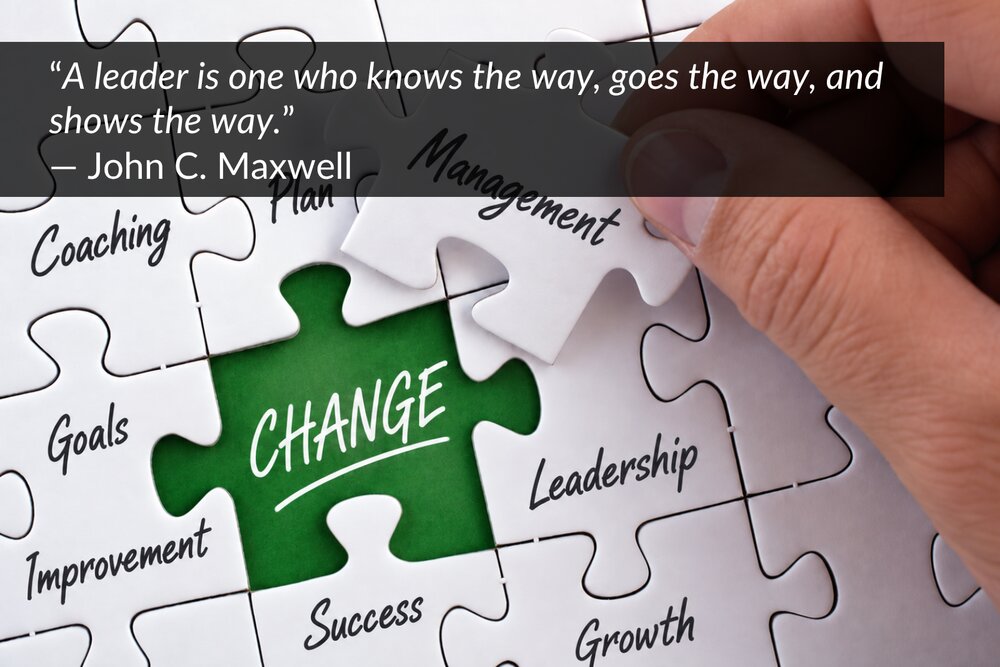
From Boss to Coach to Change Agent: The Evolution of the Modern Manager
For generations, being a manager largely meant knowing what needed to be done and making sure other people did it. That model is changing. Today, managers are expected to empower rather than control, coach rather than simply direct, develop people rather than just evaluate them and help their teams navigate constant change. Add hybrid work,…
Read more →
Strategic Thinking: The Leadership Skill Behind Better Decisions and Stronger Strategy
Strategic thinking is often associated with strategic planning. But they are not the same thing. A strategic plan defines where an organization intends to go and how it plans to get there. Strategic thinking happens before, during and beyond that process. It is the discipline of questioning assumptions, exploring possibilities and understanding implications before deciding…
Read more →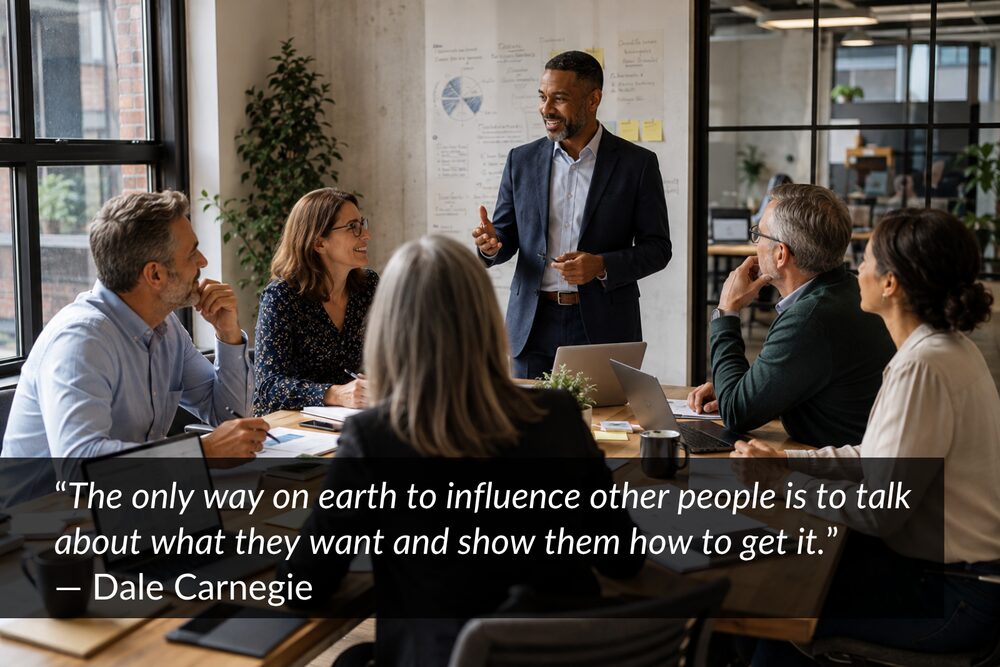
Why Understanding People Is the Foundation of Influence at Work
Dale Carnegie's How to Win Friends and Influence People has remained influential for nearly a century because it recognized something fundamental: if you want to influence someone, start by understanding what matters to them.
Read more →
Knowing your numbers is a leadership accelerator
One of the clearest differences between professionals who remain operational and those who become influential leaders is their understanding of the numbers that drive the business. Not just financial metrics. The numbers that explain performance, priorities, constraints, risks, efficiency, customer impact, delivery capacity, growth, quality, or strategic progress. At every level of an organization, people…
Read more →
The Leadership Paradoxes Managers Discover Too Late
A few years ago, I read Being the Boss: The 3 Imperatives for Becoming a Great Leader by Linda Hill. It fundamentally changed how I think about management. Not because it introduced radically new leadership techniques. But because it gave language to tensions I had already experienced for years without fully being able to describe…
Read more →
Leaders who don’t delegate undermine their own growth and their team’s productivity
Most leaders believe they delegate. They don’t. They either hold on to the work because it feels faster, or they hand it off but stay so involved that nothing really changes. Sometimes, they pass it along without enough clarity and end up redoing it altogether. In all three cases, the outcome is the same. They…
Read more →