The invisible expectations that hold you and your team back
Reading time: 4 min.
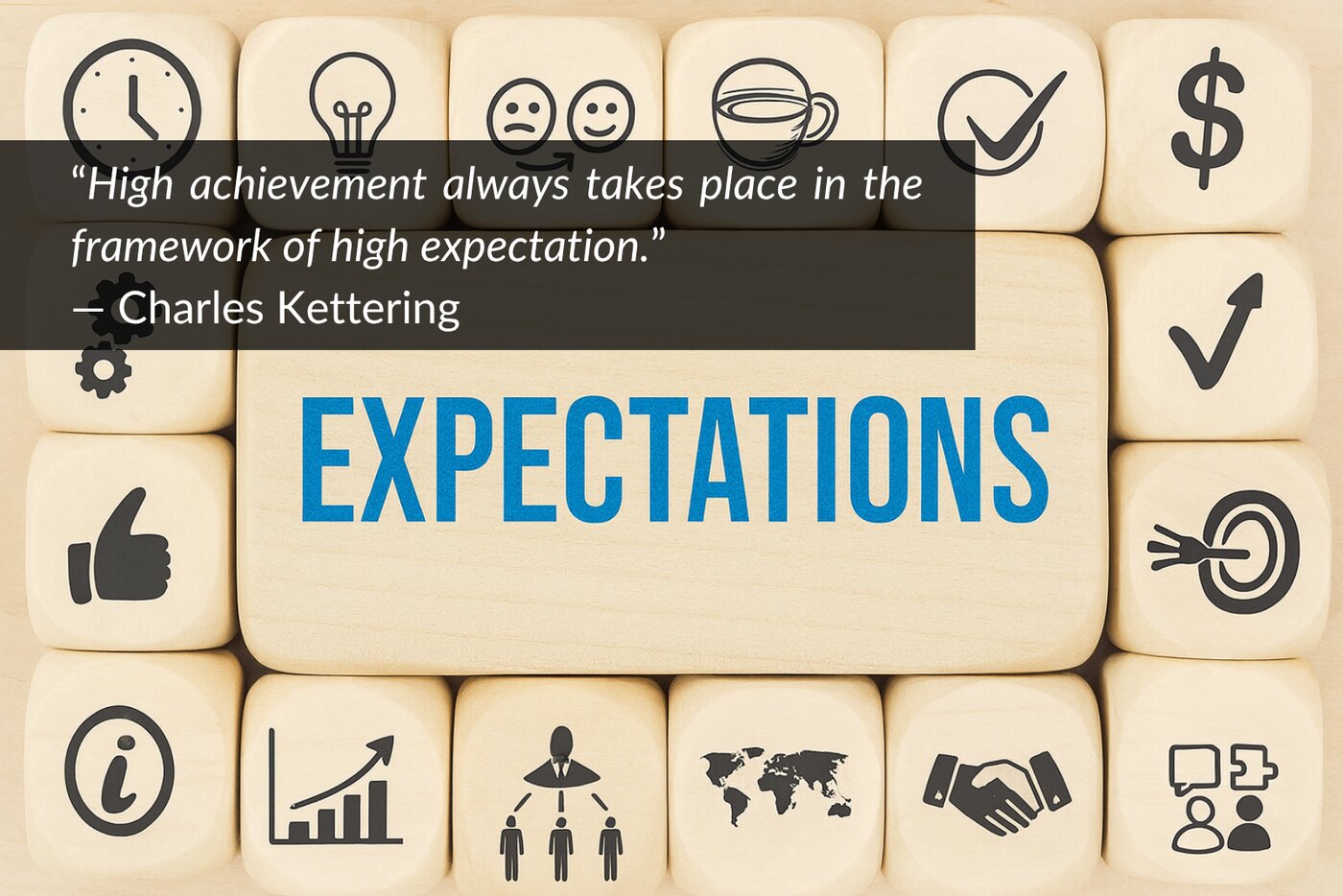
Most leaders judge their team’s performance through a lens they rarely name out loud: their own expectations.
Not expectations written in job descriptions or SMART goals, but deeply personal, often unspoken standards. Things like how quickly an email should be answered, how polished a slide deck should be, or how collaborative a teammate should be under pressure.
These expectations are shaped by how you would do things, or how you believe things ought to be done. And when others fall short, even if they were never told what was expected, frustration sets in.
This dynamic erodes performance and stunts growth. Not because people don’t care, but because they’re flying blind. They’re judged against criteria they never had the chance to meet.
The leadership blind spot: unspoken expectations
Managers rarely take the time to clarify their expectations with their team. They assume some things go without saying. But in reality, those unspoken expectations become the invisible fence limiting performance.
If you want your team to succeed, whether you’re leading individual contributors or other managers, you need to make the rules of the game visible.
But this isn’t just about how you lead others. It’s also about how you succeed within your own team.
Whether you’re a team lead or a solo contributor, you are being evaluated through someone else’s lens, often without knowing it. One of the most overlooked success skills is learning to proactively clarify the expectations of your boss, executive sponsor, or key stakeholders.
Because performance is rarely judged in a vacuum. It is judged based on unspoken assumptions about what good looks like. If you don’t take the time to uncover those assumptions, you risk falling short even while doing your best.
So yes, managing expectations with your team is best practice. But managing upward, and making sure you understand the Tier 1, 2, and 3 expectations your leader holds (whether they say so or not), is just as critical.
The three tiers of expectation
Use this structure to clarify expectations with your team, and to reflect on the expectations placed on you by your own leader.
🔹 Tier 1: Non-negotiables
- If you are the leader: These are values or deliverables that are critical to you or the business. Think punctuality, attention to detail, professionalism, spelling, presentation quality, or key client deliverables. Mistakes here are unacceptable and carry significant consequences. These expectations must be clearly defined and reinforced.
- If you are the team member (or a leader managing up): These are the expectations your boss assumes you will meet. They are rarely stated explicitly because they are considered “obvious”, which makes them dangerous to miss. Take the initiative to ask: What’s non-negotiable in your eyes? What are the responsibilities or standards where I cannot afford to fail?
🔹 Tier 2: Collaboration expectations
- If you are the leader: These relate to how you prefer to collaborate. When do you want to be consulted? When is it OK to move forward without you? How should issues be escalated? Mistakes here can create friction, but they are manageable and usually shared between you and the team.
- If you are the team member: These are areas where your leader might prefer a certain way of working, but it won’t cost you your job if you miss the mark. These expectations often surface only after a misalignment happens. You can avoid surprises by asking: How do you want to be involved in this type of work? What does “looping you in” look like? When should I hold off vs. move ahead?
🔹 Tier 3: Free-range
- If you are the leader: This is where you want your team to operate independently. You don’t need to be involved, and you expect people to take full ownership. This is where learning happens, where experimentation is welcome, and where “good enough” is sometimes the right call.
- If you are the team member: These are the areas where your boss doesn’t want to be involved. Taking initiative is expected. Mistakes are tolerated as long as they lead to learning. You can gain trust by stepping up, owning outcomes, and showing improvement over time.
Why this matters
When you divide expectations into these three tiers, you create clarity. You make it easier for your team to succeed. You also make it easier for yourself to focus your energy where it matters most.
This is not about control. It is about alignment.
The best leaders don’t just hope others meet their standards. They make their expectations visible, and they take the time to understand what’s expected of them as well. That’s how you build trust, accountability, and consistent performance, up and down the chain.
Try this
Start by writing a short expectations brief for each of your direct reports:
- What’s in Tier 1 for them?
- What kind of collaboration do you want in Tier 2?
- Where do you want to give them full ownership in Tier 3?
Then, share it. Invite a conversation. Let them ask questions. Expectations are not a one-way street, they are an alignment tool.
And for yourself, try answering the same questions based on how your boss might see you (or better ask him or her directly!):
- What might be Tier 1 in their eyes?
- How do they want to collaborate with you?
- Where do they want you to take the lead?
Then check your assumptions in your next one-on-one. You might be surprised by what’s truly expected, and what’s not.